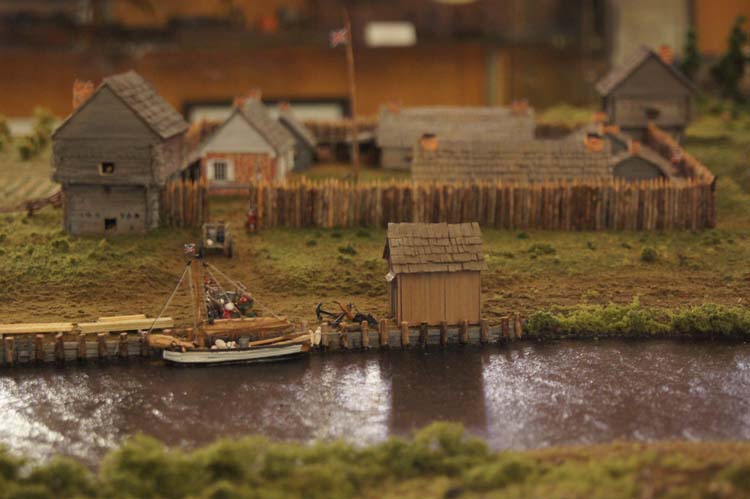
The Diamond Crystal Salt Company, a cornerstone of St. Clair, Michigan, has been intertwined with the town’s history for over a century. Founded in 1886, the company has not only provided salt to the world but has also significantly contributed to the economic, environmental, and social well-being of the community1. This article delves into the multifaceted benefits that Diamond Crystal brings to St. Clair, exploring its impact on the local economy, environment, and community.
History
The story of Diamond Crystal Salt Company begins in 1886 when entrepreneurs John and Louis Alberger, along with Charles Moore and Horace Williams, revolutionized salt production with their patented Alberger process in St. Clair, Michigan2. This innovative method, using pressure instead of a vacuum, yielded distinct diamond-shaped crystals with exceptional purity and quality3. The company, initially named St. Clair Rock Salt Co., quickly adopted the name Diamond Crystal Salt Company to emphasize the unique characteristics of its product3.
However, the company’s journey wasn’t without its challenges. Early attempts to extract salt in the St. Clair area, dating back to 1863, proved unprofitable3. It wasn’t until the Thompson Brothers successfully drilled to depths exceeding 1600 feet and implemented a two-pipe injection/extraction system in 1884 that salt production became economically viable3. Building on this success, Diamond Crystal flourished under the leadership of Charles Moore, expanding its product line and market reach4.
Over the years, Diamond Crystal changed hands several times, becoming part of General Foods in 1929, then returning to the Moore family in 19533. In 1987, Akzo Nobel acquired the company, and finally, in 1997, Cargill, a global food and agriculture conglomerate, took ownership2. Despite these transitions, Diamond Crystal has remained a steadfast presence in St. Clair, adapting to changing market demands and continuing to produce its signature salt.
Economic Impact
Diamond Crystal’s presence in St. Clair has been a significant economic driver. The company’s salt production facility provides employment for 175 people, making it one of the largest employers in the town5. This translates to stable jobs and income for many families in the area. Beyond direct employment, the company’s operations generate economic activity through its supply chain and local procurement. For instance, the nearby Marysville Ethanol plant, also owned by Cargill, spends $117 million annually to purchase 20 million bushels of corn from Michigan farmers, contributing to the agricultural economy of the region.
Cargill, the parent company of Diamond Crystal, has consistently invested in the St. Clair facility, demonstrating its commitment to the region. Cargill has made significant investments in the St. Clair facility, as detailed in the table below:
| Year | Investment Amount | Purpose |
|---|---|---|
| 2022 | $50 million 5 / $68 million 6 | To build an additional evaporation facility and expand production of Diamond Crystal kosher salt by 25%. |
| 2023 | $68 million 8 | To enhance the plant’s production capacity through increased automation, new technology, and efficiency improvements. |
It is worth noting that there is a discrepancy between sources regarding the investment amount for expanding kosher salt production. While one source mentions $50 million, another cites $68 million. Further investigation may be needed to clarify this difference.
These investments not only boost the company’s output but also reinforce its dedication to maintaining a strong presence in St. Clair8. The company’s diverse product line includes various types of salt, such as water softener salt pellets and blocks, catering to different markets and contributing to its economic stability2. Furthermore, Cargill’s global reach, with salt harvesting operations in offshore locations like Bonaire and Venezuela, highlights the potential indirect economic benefits to St. Clair through its connection to a multinational corporation2.
The popularity and demand for Diamond Crystal salt were evident in 2019 when unfounded rumors about its discontinuation circulated on Twitter. This led to a buying frenzy of the company’s three-pound packages, highlighting the brand’s strong market presence and the potential economic consequences if it were to cease production5.
Environmental Impact
While industrial operations can sometimes raise environmental concerns, Diamond Crystal has a history of responsible practices. In 1982, the company entered into a consent order with the Michigan Department of Natural Resources to reduce particulate matter emissions from its facilities9. This proactive approach demonstrates the company’s commitment to minimizing its environmental footprint. Furthermore, the company’s salt extraction process, known as solution mining, involves pumping water underground to dissolve salt deposits and then pumping the brine back to the surface for processing5. This method minimizes surface disruption and land use compared to traditional salt mining techniques.
Further research could explore Diamond Crystal’s initiatives to reduce waste, conserve water, or promote sustainability within its operations. This information would provide a more comprehensive understanding of the company’s environmental impact.
Social Impact
Diamond Crystal’s contributions to St. Clair extend beyond economic and environmental considerations. The company has been an active participant in community life, fostering a sense of social responsibility. As one of the largest employers in St. Clair, Diamond Crystal provides stable employment opportunities, contributing to the economic well-being and stability of many families in the community7. This long-standing presence and commitment to providing jobs suggest a positive social impact on the town10.
Furthermore, the company demonstrated its commitment to its employees and the community during the challenging times of the COVID-19 pandemic. Cargill employees at the St. Clair facility found ways to work safely and maintain production, showcasing their resilience and dedication10.
The St. Clair Historical Museum features a “Salt Room” dedicated to Diamond Crystal, showcasing the company’s history and its connection to the town1. This exhibit highlights the company’s significance in the community and its role in shaping local identity. Gathering quotes from local residents or employees about the impact of Diamond Crystal on their lives would further enrich the understanding of the company’s social contributions.
A Unique Legacy
Diamond Crystal’s unique salt-making process, the Alberger process, sets it apart in the industry. This patented method produces diamond-shaped crystals with a unique texture and flavor, favored by chefs and consumers alike1. The St. Clair facility is the only location in the world that produces this type of salt, adding to the town’s distinction1. This specialized production process has helped establish Diamond Crystal as a premium salt brand, further contributing to the company’s economic success and the town’s reputation.
The Alberger salt is particularly sought after in the fast-food industry due to its higher volume and lower sodium content compared to other types of salt11. It is even rumored that McDonald’s uses Diamond Crystal salt for their fries, highlighting the widespread use and recognition of the company’s product1.
Conclusion
The Diamond Crystal Salt Company has been an integral part of St. Clair, Michigan, for over 130 years. Its impact extends far beyond salt production, encompassing economic stability, environmental responsibility, and community engagement. The company has been vital to the town’s economic growth, providing employment, generating economic activity, and attracting significant investments from its parent company, Cargill5. Diamond Crystal also demonstrates a commitment to environmental responsibility through its efforts to reduce emissions and its use of solution mining, a less disruptive salt extraction method5. Furthermore, the company plays a positive role in the community by providing stable jobs and potentially engaging in social initiatives7. Diamond Crystal’s continued investment in its St. Clair facility, coupled with its unique salt-making process, ensures a bright future for both the company and the community it calls home. As St. Clair continues to evolve, Diamond Crystal remains a steadfast partner, contributing to the town’s prosperity and identity.
Works cited
1. US Connection – St. Clair Historical Museum, accessed January 26, 2025, https://www.historicstclair.com/us-connection/
2. Our Story | Diamond Crystal® Salt, accessed January 26, 2025, https://www.diamondcrystalsalt.com/our-story
3. Diamond Crystal – St. Clair Historical Museum, accessed January 26, 2025, https://www.historicstclair.com/diamond-crystal/
4. Diamond Crystal Salt Company – The Historical Marker Database, accessed January 26, 2025, https://www.hmdb.org/m.asp?m=169597
5. Cargill’s St. Clair Diamond Crystal plant, Marysville ethanol plant expanding | Crain’s Detroit Business, accessed January 26, 2025, https://www.crainsdetroit.com/crains-michigan-business/cargills-st-clair-diamond-crystal-plant-marysville-ethanol-plant-expanding
6. Magna, Cargill projects top 9 big expansions in St. Clair County | Crain’s Detroit Business, accessed January 26, 2025, https://www.crainsdetroit.com/crains-michigan-business/magna-cargill-projects-top-9-big-expansions-st-clair-county
7. Moment in History Extra: Diamond Crystal Salt Company – YouTube, accessed January 26, 2025, https://www.youtube.com/watch?v=jwvw18D2K44
8. Cargill Invests $68 Million in facility and technology upgrades | EDA of St. Clair County, accessed January 26, 2025, https://edascc.com/news/article/cargill-invests-68-million-in-facility-and-technology-upgrades
9. Diamond Crystal Salt Company 13-1982 (pdf), accessed January 26, 2025, https://www.epa.gov/system/files/documents/2021-12/diamondcrystal_13-1982.pdf
10. Diamond Crystal Kosher Salt gives chefs and foodies more to love – Cargill, accessed January 26, 2025, https://www.cargill.com/story/chefs-love-cooking-with-diamond-crystal-kosher-salt
11. St. Clair Salt Mine (Diamond Crystal), St. Clair County, Michigan, USA – Mindat.org, accessed January 26, 2025, https://www.mindat.org/loc-125360.html
About The Author